Paprika
The Dreamworld Unleashed – Navigating the Boundaries of Reality and Fantasy in Satoshi Kon's Masterpiece

Satoshi Kon’s Paprika (2006) is widely regarded as one of the most complex and visually stunning animated films ever produced. A kaleidoscopic exploration of the mind, dreams, and the permeability of reality, the film pushes the boundaries of narrative and animation, raising profound philosophical and psychological questions about identity, control, and the nature of existence. As a seminal work in the world of anime, Paprika merges science fiction, psychological thriller, and philosophical inquiry into a single, multifaceted cinematic experience. It stands as a testament to Kon’s distinctive style, thematic preoccupations, and ability to blend dreams with reality seamlessly.
Based on Yasutaka Tsutsui’s 1993 novel, Paprika centres around a futuristic technology called the DC Mini, which allows users to enter and manipulate dreams. Dr Atsuko Chiba, a researcher and psychotherapist, uses this technology under her dream alter ego, “Paprika”, to treat her patients. However, the film quickly escalates into a narrative about the invasion of the dream world into the waking world when the DC Mini is stolen, blending dreams and reality that threatens to obliterate the boundaries between the two.
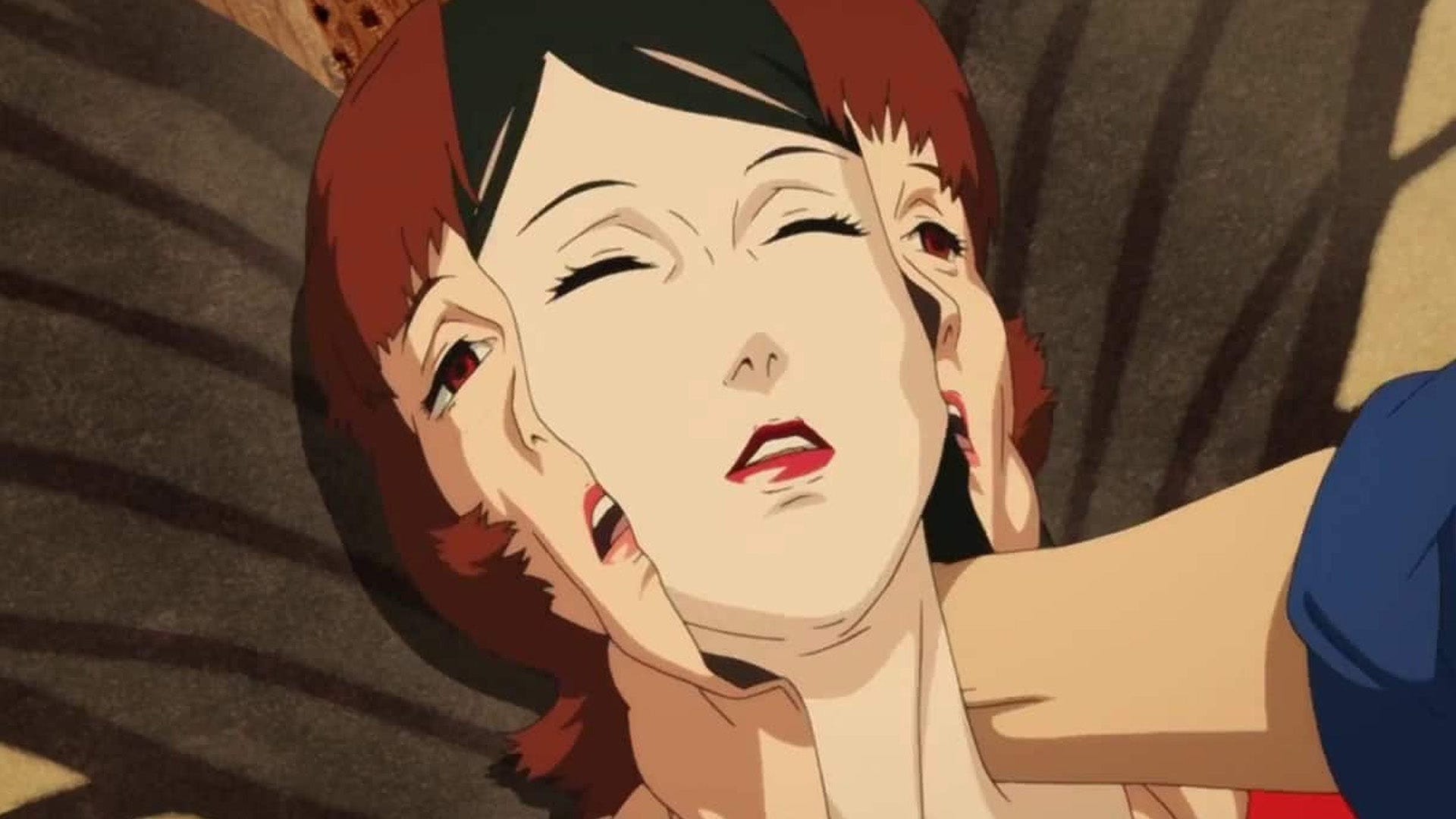
Narrative Structure: The Blurring of Reality and Dreams
The Opening Sequence: Entering the Dreamscape
From the very first moments of Paprika, Satoshi Kon immerses the audience in the dream world. The opening sequence follows Paprika, Dr. Atsuko Chiba's dream avatar, as she navigates a series of shifting dreamscapes. This sequence not only introduces the audience to Paprika’s dream-hopping abilities but also sets the tone for the rest of the film by establishing its central theme: the fluidity of the boundary between dreams and reality.
The film opens with Paprika moving rapidly from one dream scenario to another. She seamlessly transitions from a circus performer to a detective in a noir thriller to a figure fleeing from an assassin in a fantastical landscape. This fluidity of movement, coupled with the rapid changes in setting, mirrors dreams' erratic and often illogical structure. Kon blurs the line between reality and fantasy from the beginning by plunging the audience into a series of dreamscapes without clear transitions.
The opening sequence is also significant in establishing Paprika’s role as a guide through the dream world. As a “dream detective,” Paprika helps individuals navigate their subconscious minds and confront their psychological issues. This introduction to Paprika’s abilities highlights the therapeutic potential of the DC Mini technology while also foreshadowing the dangers of unregulated access to the dream world.
The Central Conflict: The Stolen DC Mini
The plot of Paprika centres around the theft of the DC Mini, a device that allows users to enter and manipulate dreams. Dr. Tokita, the brilliant but childlike inventor of the DC Mini, loses control over the technology when it is stolen by a mysterious figure who uses it to invade the dreams of others and merge them with reality. As dreams begin to bleed into the waking world, the characters must confront the chaos that ensues and uncover the thief's identity.
The theft of the DC Mini sets off a series of events that ultimately lead to the collapse of the boundary between dreams and reality. What begins as a tool for psychological therapy becomes a weapon of mass psychological disruption, with the dream world becoming increasingly invasive and uncontrollable. As characters’ dreams begin to affect their waking lives, the film explores the dangers of unchecked technological advancement and the ethical implications of entering the subconscious mind without consent or control.
The central conflict in Paprika is not just about retrieving the stolen DC Mini—it is also about reclaiming the boundary between reality and dreams. The characters must confront the ways in which the dream invader has weaponised their desires, fears, and subconscious thoughts. The film raises important questions about agency, identity, and the consequences of losing control over one’s mind.
The Climax: Dream and Reality Collide
As the film progresses, the boundary between dreams and reality becomes increasingly tenuous. The climax of Paprika occurs when the dream world fully invades the waking world, creating a surreal landscape where anything is possible. Buildings morph into gigantic figures, inanimate objects come to life, and characters’ subconscious desires manifest in bizarre and often disturbing ways.
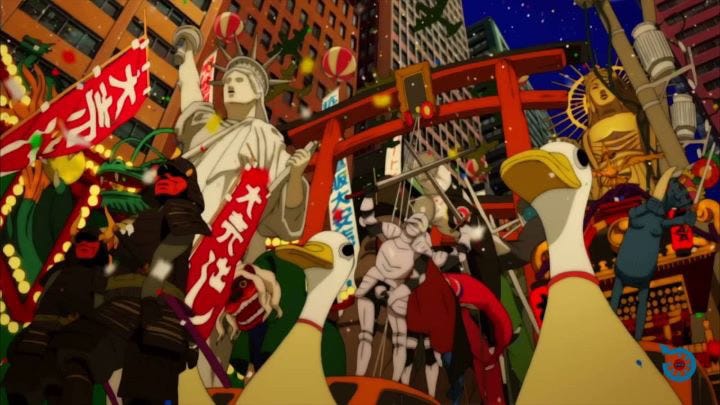
This merging of dreams and reality reaches its apex during the parade scene, one of the most iconic sequences in the film. The parade, which initially appears in the dreams of one of the characters, becomes a symbol of the chaotic blending of the two worlds. It grows increasingly grotesque as it absorbs more elements from both the dream and waking worlds, eventually taking on a life of its own. The parade represents the uncontrollable nature of the unconscious mind and how dreams can consume reality if left unchecked.
The climax of Paprika forces the characters to confront the ways in which their own subconscious minds have contributed to the chaos. Dr. Atsuko Chiba, in particular, must reconcile her dream persona, Paprika, with her waking self to restore the boundary between dreams and reality. This moment of self-confrontation is crucial to the resolution of the film’s central conflict, as it emphasises the importance of understanding and integrating one’s own unconscious desires to regain control over reality.
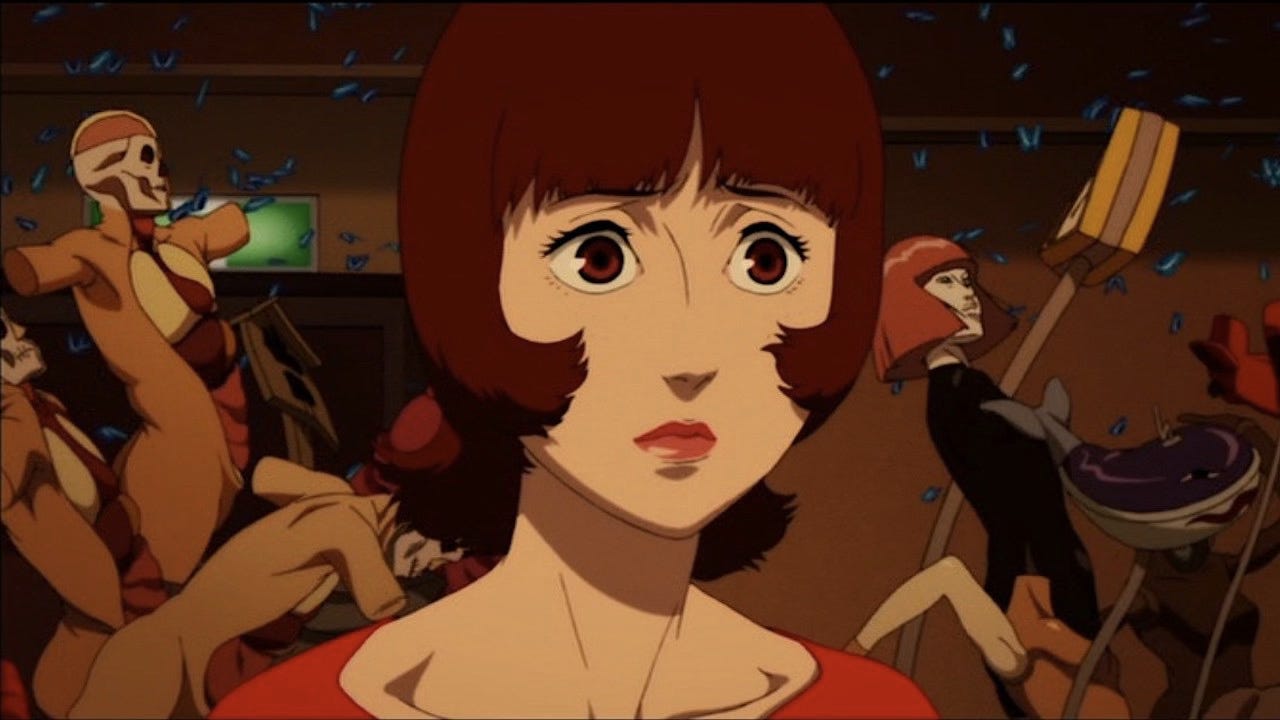
Themes: Identity, Technology, and the Unconscious Mind
The Duality of Identity: Atsuko Chiba and Paprika
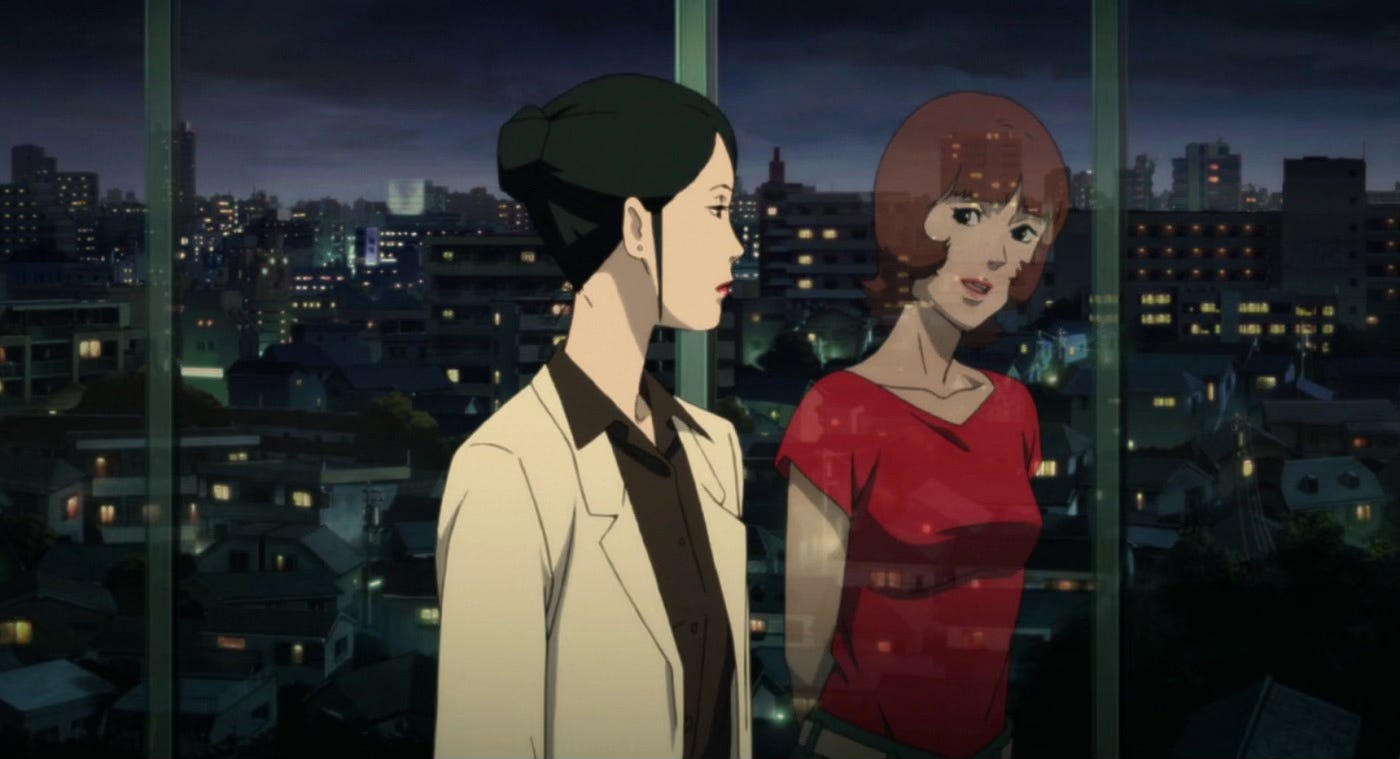
One of the central themes of Paprika is the duality of identity, as embodied by the relationship between Dr. Atsuko Chiba and her dream alter ego, Paprika. Atsuko is a severe and reserved scientist, while Paprika is a playful and free-spirited dream guide. The two characters represent different aspects of Atsuko’s personality, with Paprika expressing her repressed desires and emotions.
Throughout the film, Atsuko struggles to maintain control over her dual identity. While she initially uses Paprika as a tool to help others, the increasing blurring of the boundaries between dreams and reality forces her to confront the ways in which she has used Paprika to escape her own emotional issues. The film explores the psychological concept of the “shadow self,” with Paprika serving as a manifestation of Atsuko’s hidden desires and fears.
The duality of identity in Paprika is further complicated by the film’s exploration of technology and its impact on the self. The DC Mini allows individuals to enter and manipulate dreams, but it also raises questions about the nature of identity in a world where the boundaries between the conscious and subconscious mind are permeable. As the characters lose control over their dreams, they also lose control over their sense of self, leading to a crisis of identity that mirrors the larger crisis of reality in the film.
Technology and Control: The DC Mini as a Tool of Liberation and Oppression
The DC Mini is central to the narrative of Paprika, serving as both a tool of liberation and a weapon of oppression. On one hand, technology allows individuals to access their subconscious minds and confront their psychological issues. Paprika uses the DC Mini to help patients work through their trauma and fears, highlighting the potential of the technology to promote self-understanding and healing.
However, the theft of the DC Mini and its subsequent use as a tool for invading others’ dreams reveals the darker side of the technology. The DC Mini becomes a means of controlling and manipulating others, turning their subconscious minds into a battleground for power and domination. The film raises important ethical questions about the use of technology to access the inner workings of the mind and the potential for abuse when such technology falls into the wrong hands.
The DC Mini also serves as a metaphor for how technology can blur the boundaries between reality and fantasy. In a world where dreams can be manipulated and controlled, the distinction between what is real and what is imagined becomes increasingly challenging to maintain. The film suggests that while technology has the potential to expand our understanding of the mind, it also carries the risk of eroding our sense of self and reality.
The Unconscious Mind: Dreams as a Reflection of Desire and Fear
At its core, Paprika is a film about the unconscious mind and how dreams reflect our deepest desires and fears. The dreamscapes in the film are highly symbolic, with each character’s dreams revealing important insights into their psychological state. For example, the recurring parade scene represents the chaotic nature of the unconscious mind, with its seemingly random assortment of objects and figures symbolising the unstructured and often illogical nature of dreams.
The film also explores the idea that dreams are a means of confronting repressed emotions and unresolved trauma. Many of the characters in *Paprika* use the DC Mini to escape from their waking lives and confront their psychological issues in the safety of the dream world. However, as the boundaries between dreams and reality begin to collapse, the characters are forced to confront the ways in which their dreams have influenced their waking lives.
Paprika suggests that dreams can be a source of insight and healing, but they can also be a source of danger if left unchecked. The invasion of the dream world into reality represents how repressed desires and fears can consume the self if they are not adequately understood and integrated. The film’s exploration of the unconscious mind highlights the importance of self-awareness and the need to confront our inner demons to maintain control over our lives.
Visual Aesthetic: Animation as a Medium for Exploring Dreams
The Fluidity of Animation: Breaking the Boundaries of Reality
One of the most striking aspects of Paprika is its use of animation to explore the fluidity of dreams and the permeability of reality. As a medium, animation allows for a level of creative freedom that is impossible in live-action films. Kon takes full advantage of this freedom, using the medium to create constantly shifting and transforming dreamscapes.
The fluidity of animation in Paprika reflects the fluid nature of dreams, where the laws of physics and logic do not apply. Characters move effortlessly between different settings and realities, morphing objects and environments in response to their subconscious thoughts and desires. This constant state of flux creates a sense of instability that mirrors the film’s central theme of blurring boundaries between dreams and reality.
Kon’s use of animation also allows him to experiment with visual symbolism and metaphor in ways that would be difficult to achieve in live-action filmmaking. The dreamscapes in *Paprika* are filled with surreal and symbolic imagery, from the recurring parade to the giant dolls and figures that populate the characters’ dreams. These visual elements serve as metaphors for the characters’ psychological states, with the chaotic and often unsettling imagery reflecting their inner turmoil.
Colour and Symbolism: Visual Storytelling in Paprika
Colour plays a crucial role in Paprika, with Kon using it to convey mood, emotion, and thematic depth. The dream world is often depicted in vibrant, saturated colours, emphasising its surreal and fantastical nature. In contrast, the waking world is rendered in more muted tones, creating a stark contrast between the two realms.
Colour also serves as a form of visual storytelling, with different colour schemes associated with specific characters and emotions. For example, Paprika is often depicted in bright, warm colours, reflecting her free-spirited and playful nature. At the same time, Dr Atsuko Chiba is associated with cooler, more subdued tones, highlighting her reserved and serious personality. This contrast between Paprika and Atsuko’s colour palettes reinforces the duality of their identities and their struggle to reconcile their two selves.
Symbolism is also a key element of the film’s visual aesthetic. The recurring parade, for example, serves as a metaphor for the uncontrollable nature of the unconscious mind, with its chaotic assortment of objects and figures representing the random and often illogical nature of dreams. The giant dolls in the film are similarly symbolic, representing the characters’ feelings of powerlessness and fear in the face of the dream world’s invasion.
Kon’s use of visual symbolism and colour elevates Paprika beyond a simple narrative about dreams and reality. The film’s visual aesthetic is integral to its exploration of the unconscious mind, with the dreamscapes reflecting the characters’ inner states and emotional journeys.
The Parade Sequence: A Masterclass in Surrealism
One of the most iconic sequences in Paprika is the recurring parade, which serves as a central visual motif throughout the film. The parade is a surreal and chaotic procession of objects, figures, and creatures, ranging from traditional Japanese dolls to giant appliances and cartoon characters. This sequence is a masterclass in surrealism, with Kon using the parade to explore the unconscious mind’s capacity for both wonder and horror.
The parade’s constant presence in the film represents how the unconscious mind is always at work, even when we are unaware of it. As the parade grows larger and more grotesque over the course of the film, it becomes a symbol of the increasing collapse of the boundary between dreams and reality. The characters’ inability to stop the parade reflects their loss of control over their own minds and their struggle to regain a sense of order and stability.
Visually, the parade sequence is a stunning example of Kon’s ability to create a sense of fluidity and transformation in animation. The objects and figures in the parade are constantly shifting and evolving, with new elements being added as the parade moves through different environments. This sense of constant movement and change mirrors the fluid nature of dreams and reinforces the film’s central theme of the blurring of boundaries between fantasy and reality.
Philosophical Underpinnings: The Nature of Reality and Perception
Cartesian Dualism: The Mind-Body Problem in Paprika
At the heart of Paprika is a philosophical inquiry into the nature of reality and perception. The film raises important questions about the relationship between the mind and the body, particularly in its exploration of dreams as a means of accessing the subconscious mind. This theme is closely related to the philosophical concept of Cartesian dualism, which posits that the mind and body are distinct entities that interact.
In Paprika, the DC Mini allows characters to enter the minds of others, effectively separating the mind from the body. This technological ability to manipulate dreams raises important questions about the nature of identity and the self. If the mind can exist independently of the body in the dream world, what does this mean for our understanding of reality? The film suggests that reality is not fixed but a construct of the mind, influenced by our perceptions, desires, and fears.
The mind-body problem is further explored through the character of Dr. Atsuko Chiba, whose dual identity as Paprika reflects the tension between her conscious and unconscious selves. Paprika represents Atsuko’s repressed desires and emotions, suggesting that the mind can contain multiple conflicting identities. This exploration of the multiplicity of the self raises important philosophical questions about the nature of consciousness and how our minds shape our perception of reality.
The Ethics of Dream Manipulation: Control and Consent
Another crucial philosophical theme in Paprika is the ethical implications of dream manipulation. The DC Mini allows individuals to enter and manipulate the dreams of others, raising important questions about control, consent, and autonomy. Throughout the film, characters grapple with the consequences of using the DC Mini to access the subconscious minds of others without their consent.
The film suggests that the ability to manipulate dreams is a form of power with the potential for both positive and negative outcomes. On the one hand, Paprika uses the DC Mini to help individuals confront their psychological issues and achieve healing. On the other hand, the theft of the DC Mini and its use as a tool for invading others’ dreams highlights the dangers of using technology to control the minds of others.
The film’s depiction of the collapsing boundary between dreams and reality further explores the ethical implications of dream manipulation. As the dream world invades the waking world, characters lose control over their own minds and become vulnerable to external forces. This loss of control raises important questions about the limits of autonomy and the ways in which technology can be used to manipulate and control individuals.
Paprika as a Meditation on the Nature of Dreams, Reality, and the Self
Satoshi Kon’s Paprika is a visually stunning and philosophically rich exploration of the boundaries between dreams, reality, and the self. Through its complex narrative structure, exploration of dual identity, and use of animation to create fluid and surreal dreamscapes, the film raises important questions about the nature of perception, the unconscious mind, and the ethical implications of technological advancement.
At its core, Paprika is a meditation on the fluidity of reality and the ways in which our perceptions shape our understanding of the world. The film suggests that reality is not a fixed construct but constantly shifts and evolves in response to our desires, fears, and unconscious thoughts. Through its exploration of the mind-body problem, the ethics of dream manipulation, and the duality of identity, Paprika offers a profound and thought-provoking inquiry into the nature of existence.
As a work of art, Paprika is a testament to animation's power to explore complex philosophical and psychological themes. Satoshi Kon’s ability to blend narrative, visual symbolism, and philosophical inquiry into a cohesive cinematic experience makes Paprika a masterpiece of animation and science fiction. Its exploration of the boundaries between dreams and reality remains as relevant today as it was upon its release, making it a timeless work that continues to captivate and challenge audiences.